May 2026 | We are looking for one PhD student with 4-year scholarship in Intelligent Building-Integrated Energy Systems
Position: PhD Student (Intelligent Building-Integrated Energy Systems) with 4-Year Scholarship
Project Description:
The Building Informatics and Operations Research (BIOR) Lab at the National University of Singapore (NUS) is looking for one outstanding and highly motivated PhD student to work on intelligent building-integrated energy systems for clean mobility, grid flexibility, and climate resilience.
The broader research direction focuses on the modeling, optimization, control, and validation of building-integrated distributed energy resources, including photovoltaics, electric vehicles, battery storage systems, smart chargers, and flexible building loads. The project aims to develop scalable and low-cost solutions that enable buildings to support clean mobility, improve on-site renewable energy utilization, reduce grid stress, and enhance urban energy resilience.
The project is highly interdisciplinary and translational, spanning building energy systems, renewable energy integration, EV charging infrastructure, DC microgrids, optimization, distributed control, hardware-in-the-loop testing, real-world demonstration, and technology commercialization.
Scholarship and Program Information:
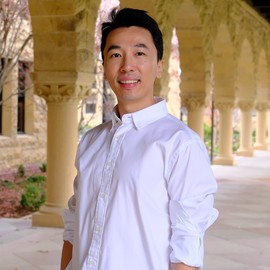
The PhD student will be advised by Assistant Professor Maomao Hu from the Department of the Built Environment, College of Design and Engineering, NUS.
The position is supported through the NUS Guangzhou Research Translation and Innovation Institute (NUSGRTII). The scholarship is expected to cover four years of tuition fees and a monthly stipend, subject to NUS and NUSGRTII scholarship terms and conditions.
The student will be based primarily at NUS in Singapore. The student may travel to Guangzhou for research translation, pilot demonstration, industry engagement, and commercialization-related activities.
Responsibilities:
- Develop system-level energy models for buildings, rooftop photovoltaics, EV charging infrastructure, battery storage systems, DC microgrids, and flexible electrical loads.
- Develop advanced control strategies for coordinating distributed energy resources and EV charging demand under uncertain renewable generation and user behavior.
- Explore distributed, data-driven, and communication-light control algorithms for scalable building energy management.
- Build simulation environments to evaluate system performance under different building types, EV usage patterns, solar generation profiles, electricity tariffs, grid constraints, and urban operating conditions.
- Implement and test selected control strategies in hardware-in-the-loop, laboratory, or prototype settings.
- Contribute to research translation, including IP generation, prototype development, deployment toolkit preparation, and potential pilot demonstration.
- Publish scientific papers in high-impact journals and present findings at seminars and international conferences.
- Work closely with postdocs, PhD students, research assistants, collaborators, and industry partners within the BIOR Lab and the Centre for Digital Building Technology.
Required Qualifications and Skills:
- A bachelor’s or master’s degree in Civil Engineering, Electrical Engineering, Mechanical Engineering, Energy Engineering, Architectural Engineering, Automation, Computer Science, or other related fields.
- Strong background in one or more of the following areas: building energy systems, renewable energy systems, EV charging, power systems, DC microgrids, optimization, control, machine learning, or energy system simulation.
- Strong programming skills in Python, MATLAB, R, or similar languages.
- Experience with energy system modeling, power system simulation, optimization, control algorithm development, or data-driven modeling is highly desirable.
- Experience with hardware-in-the-loop testing, embedded control, Modelica, OpenDSS, EnergyPlus, or similar simulation platforms is a plus.
- Interest in translational research, prototype development, technology deployment, and commercialization is highly encouraged.
- Strong motivation to conduct interdisciplinary research with both academic and practical impact.
- Strong oral and written communication skills in English.
Application Deadline: 1 August 2026
PhD Study Start Date: January 2027
How to Apply:
Interested applicants should send an email with the subject line Prospective_PhD_{First Name}_{Last Name} to Assistant Professor Maomao Hu at maomaohu@nus.edu.sg.
The email should be written in English and include the following materials:
- CV/resume in English, with an emphasis on computational and research skills.
- Transcripts from undergraduate and/or graduate studies.
- GitHub repository, if any.
- Contact information for 2–3 references.
- Other materials demonstrating research and work capabilities, such as first-author publications, manuscripts in preparation, project reports, or technical writing samples.
Due to the high volume of inquiries, I may not be able to respond to every applicant. However, please rest assured that each email will be carefully reviewed, and I will respond promptly if your qualifications align with current opportunities.